Plum Investing: Designing for why users didn’t invest
Plum · 2023
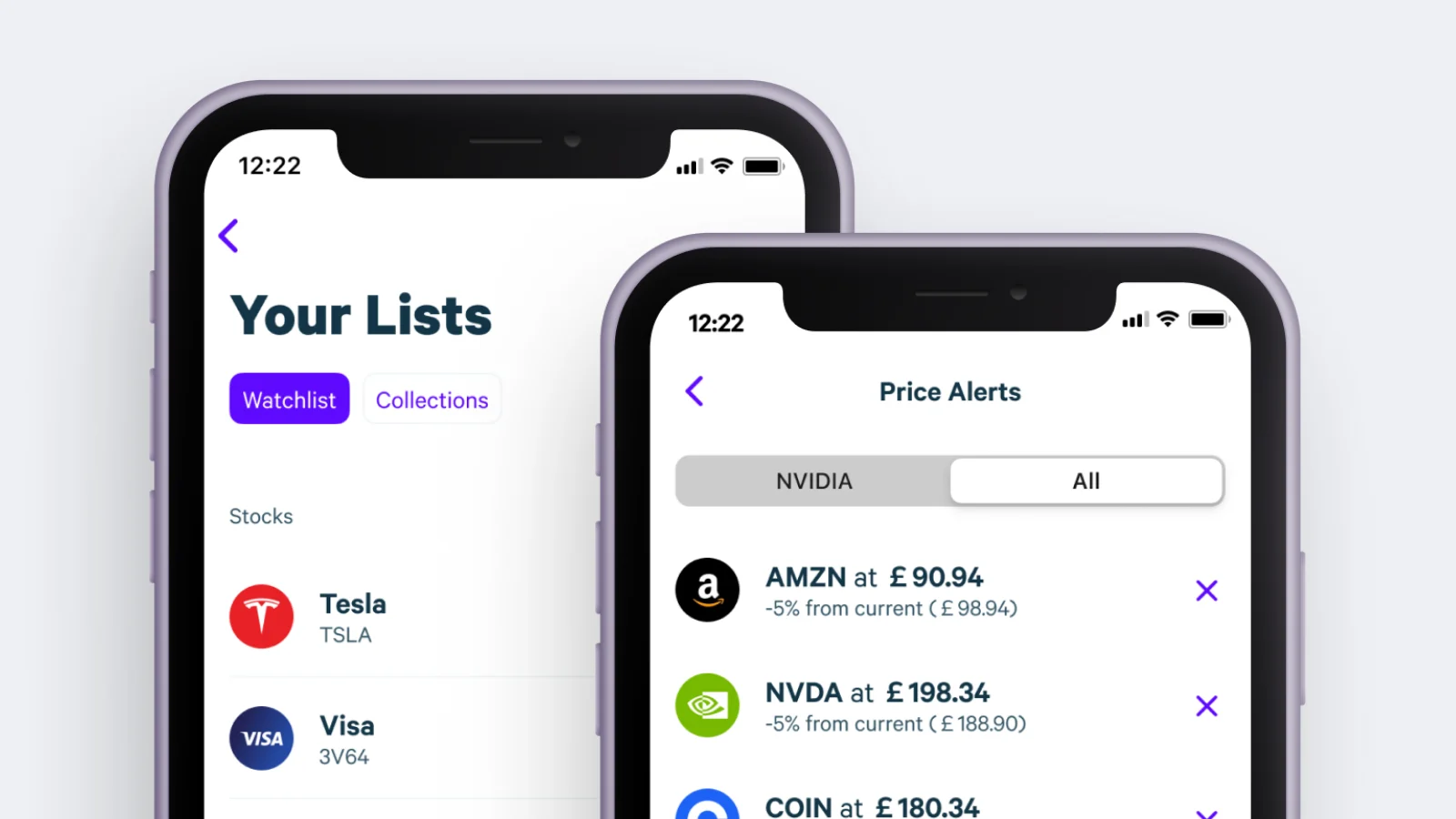
A watchlist and price alerts feature to support first-time investors in becoming more confident in their investing journey.
Role
Senior Product Designer. I led design and research for Plum’s newly launched investment product, working with three PMs, engineers and a data analyst. I also set up design system processes and worked with marketing, legal and leadership.
Price alerts and the watchlist
Problem
Plum’s users went through identity checks (KYC) to sign up for investing, but most of them never started investing and retention was low. The business assumed Plum needed more competitive, complex features to match other investment apps.
Goal
If first-time investors could track stocks and get notified at the right moment, more of them would make a first investment. Success metrics were weekly active investors and conversion to a first investment.
Opportunity
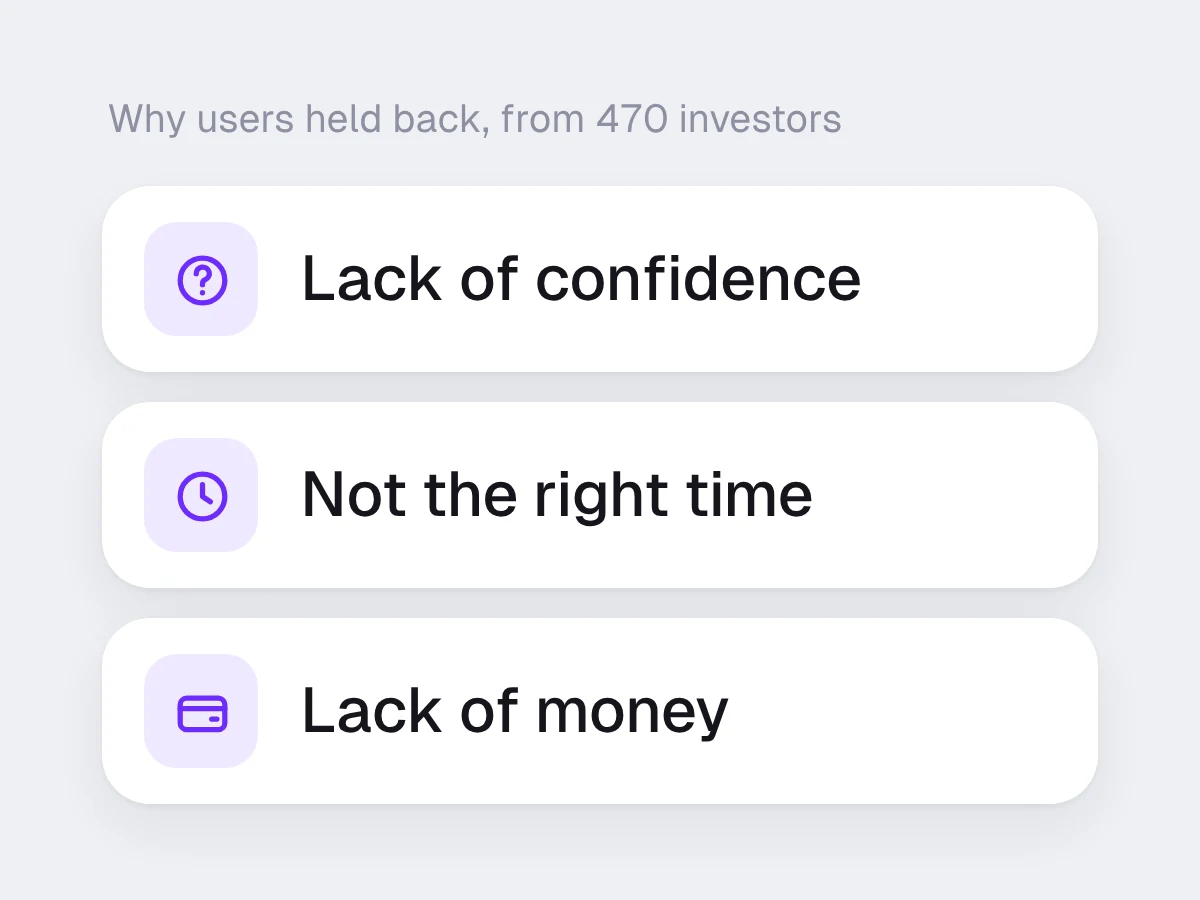
Research I conducted revealed that most of Plum’s users were inexperienced and while they trusted Plum, there were three reasons holding them back from starting investing after sign up: they lacked confidence, were waiting for the right time or didn’t have enough money just yet. The features we were originally focusing on weren’t addressing the lack of confidence.
Challenges
Feature parity pressure
The roadmap was led by what competitors offered, such as limit orders and stop loss.
Inexperienced investors
Investing is full of jargon, and the product had to build confidence without overwhelming users.
A short timeline
Two features had to be designed, tested and shipped in eight weeks.
Solution
Price alerts and the watchlistPrice alerts and a watchlistSolves inexperienced investors
People save stocks without having to buy and get notified at their set price, including easy-to-understand explanations. Two rounds of testing with less experienced investors shaped the final designs.
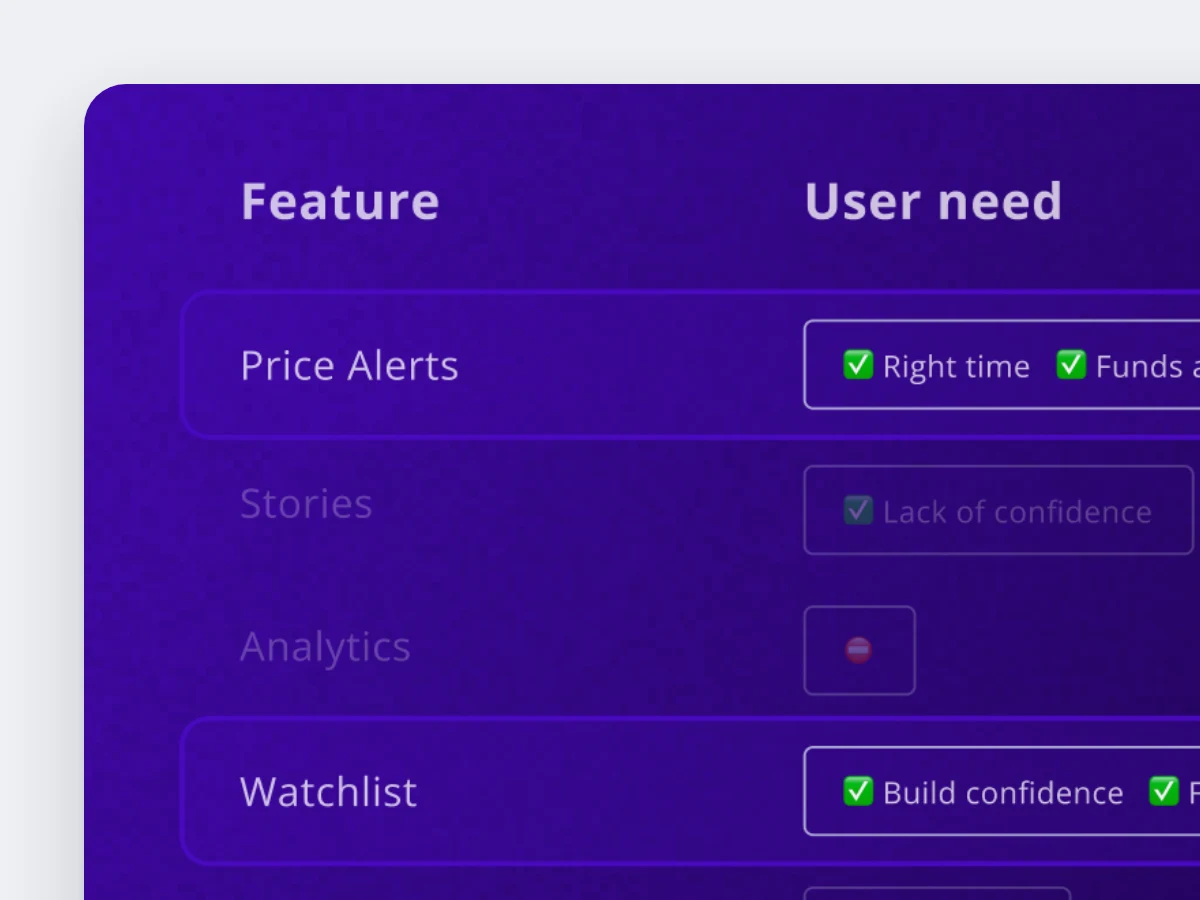
The prioritisation frameworkA prioritisation frameworkSolves feature parity and timeline
I scored each requested feature on user need, business need and effort, which showed price alerts and watchlist as the strongest fit.
The survey resultsResearch that changed the planSolves feature parity
I used insights collected through a survey among Plum’s user base to move us from limit orders to price alerts, a simpler first step towards automation and more usable for inexperienced investors.
Outcome
Both features shipped within eight weeks. The prioritisation framework was adopted by the team and leadership, and decisions were guided by the findings from user research. Testers liked saving stocks without having to invest straight away, and their feedback that the list was hard to find shaped the next iteration.
 Plum · 2023