Content engine: A UX playbook for skills and AI tools
Moss · 2026
UX principles, an automated quality check and onboarding blocks that cover the whole journey of a skill and AI tool, from finding it to understanding its value.
Role
Senior Product Designer. Research synthesis, UX principles, the skill UX checker, the block system and the workflow. I built the blocks in the production website code with Claude Code and Prismic.
The Get started block
Problem
We wanted to offer skills and AI tools to finance professionals. To do that well, we had to look at the whole journey: people have to find a skill, trust it, install it, use it and make sense of what it gives them. There was no playbook yet for that, so I set up a system that covers every step and solves for what people need at each one.
Goal
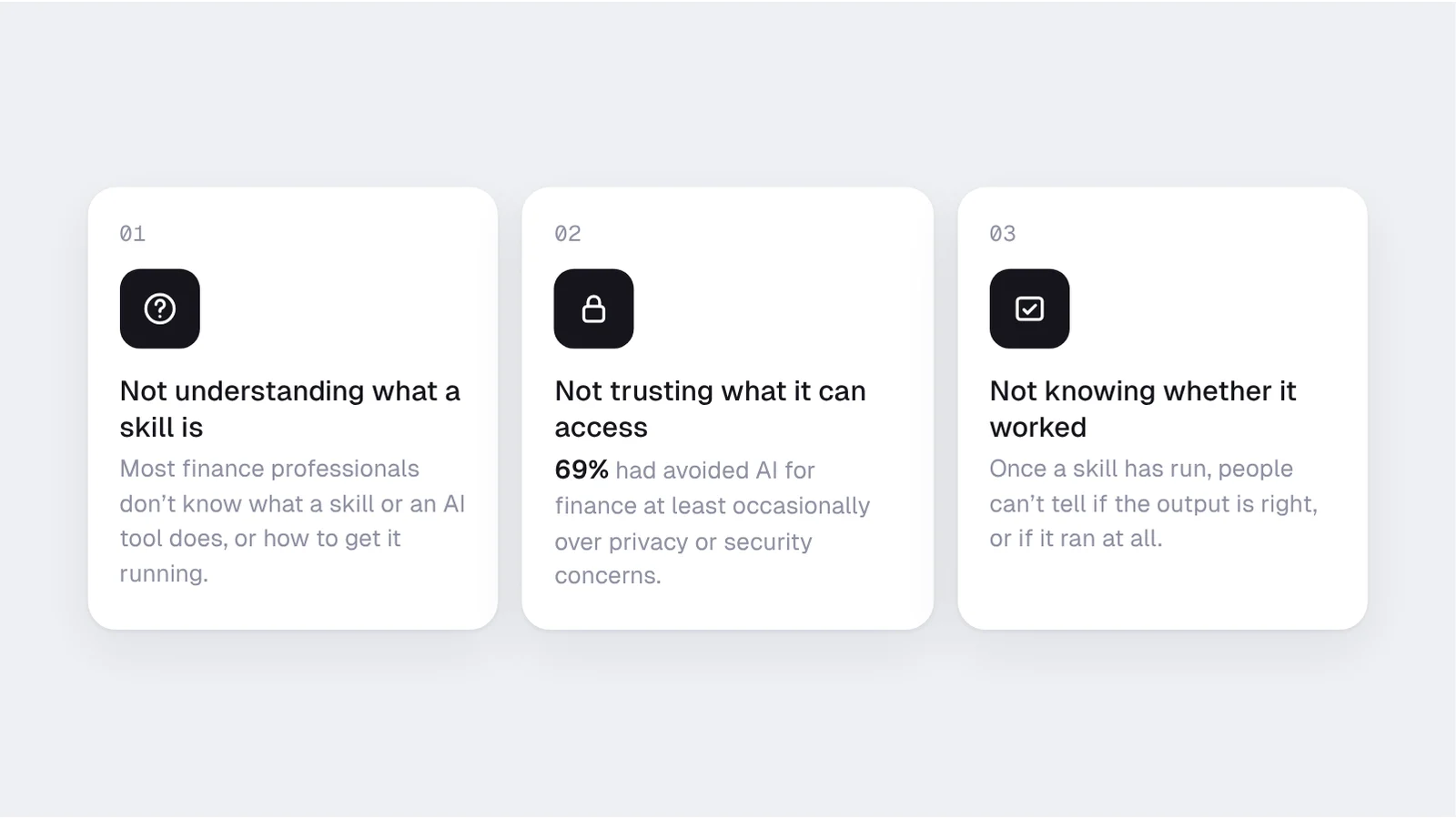
My team’s hypothesis was: skills and AI tools can work as awareness pieces for Moss, if we design for what holds finance professionals back: not understanding what a skill or an AI tool is, not trusting what it can access and not knowing whether it worked. And if every skill and tool meets the same quality bar.
Success metrics
UsablePositive feedback after using a skill or tool, and download and install numbers.
Consistent and high qualityEvery article follows the same template, and every skill and tool passes the UX check.
FastTeammates produce an article page quickly, because the system carries the design knowledge, and quality is checked by the UX check, not by hand.
Challenges
No playbook yet
No research or guidelines were available to understand what defines good UX in a skill.
Knowing a skill worked
Only once a finance professional has used a skill or tool and got the output, we would know if it had worked.
My first engineering work
The first time I created a schema and UI in our content management system, Prismic.
Non-tech-savvy users
Most users don’t have technical skills to understand the ins and outs of AI.
Solution
Three findingsResearchSolves no playbook
Desk research on adjacent evidence (Anthropic documentation, public discussion and trust studies from comparable products) and surveys. 69% of finance professionals had avoided AI for finance at least occasionally over privacy or security concerns. The research showed where people get stuck across the journey, which I translated into 11 UX principles.
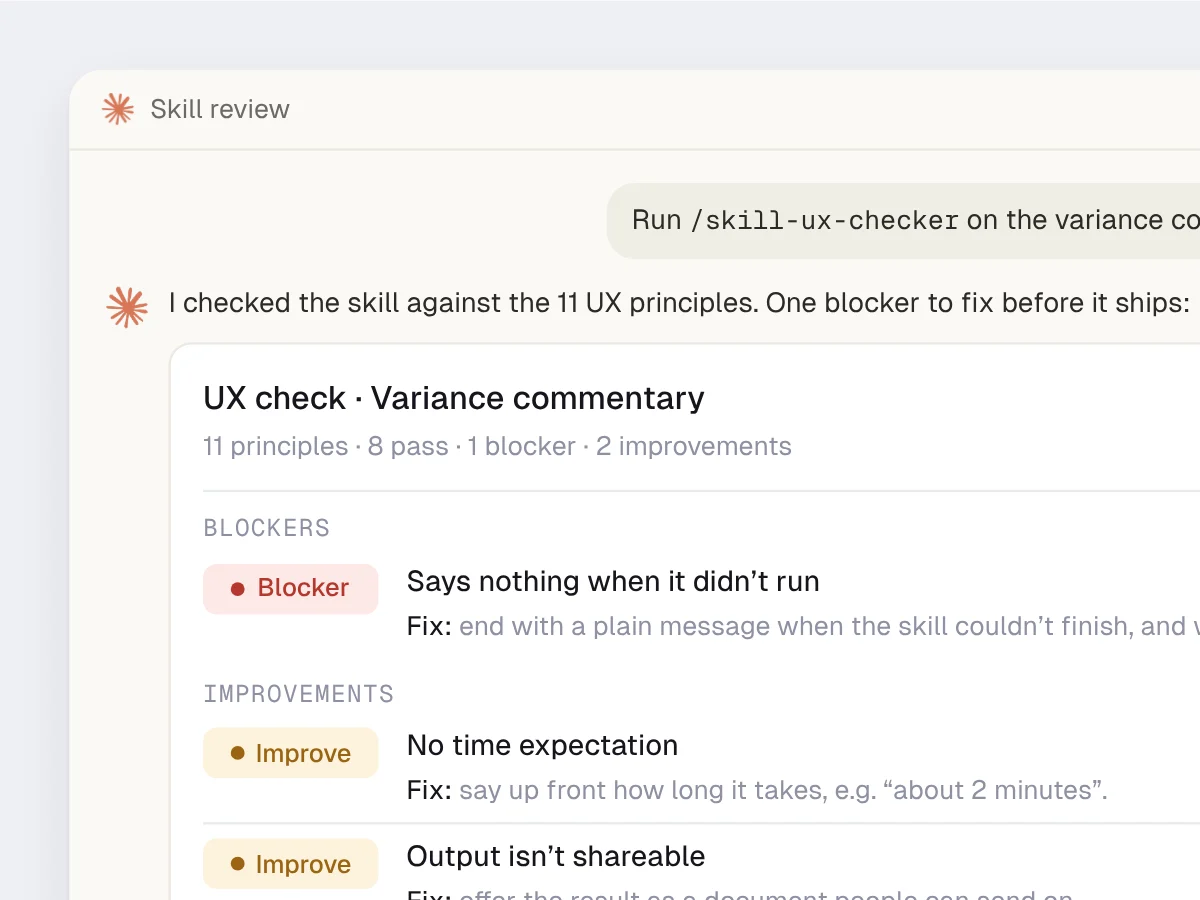
The skill UX checkerThe skill UX checkerSolves no playbook
The 11 UX principles as a pass/fail audit to check a skill or AI tool: one concrete fix per fail, blockers and suggestions for improvements.
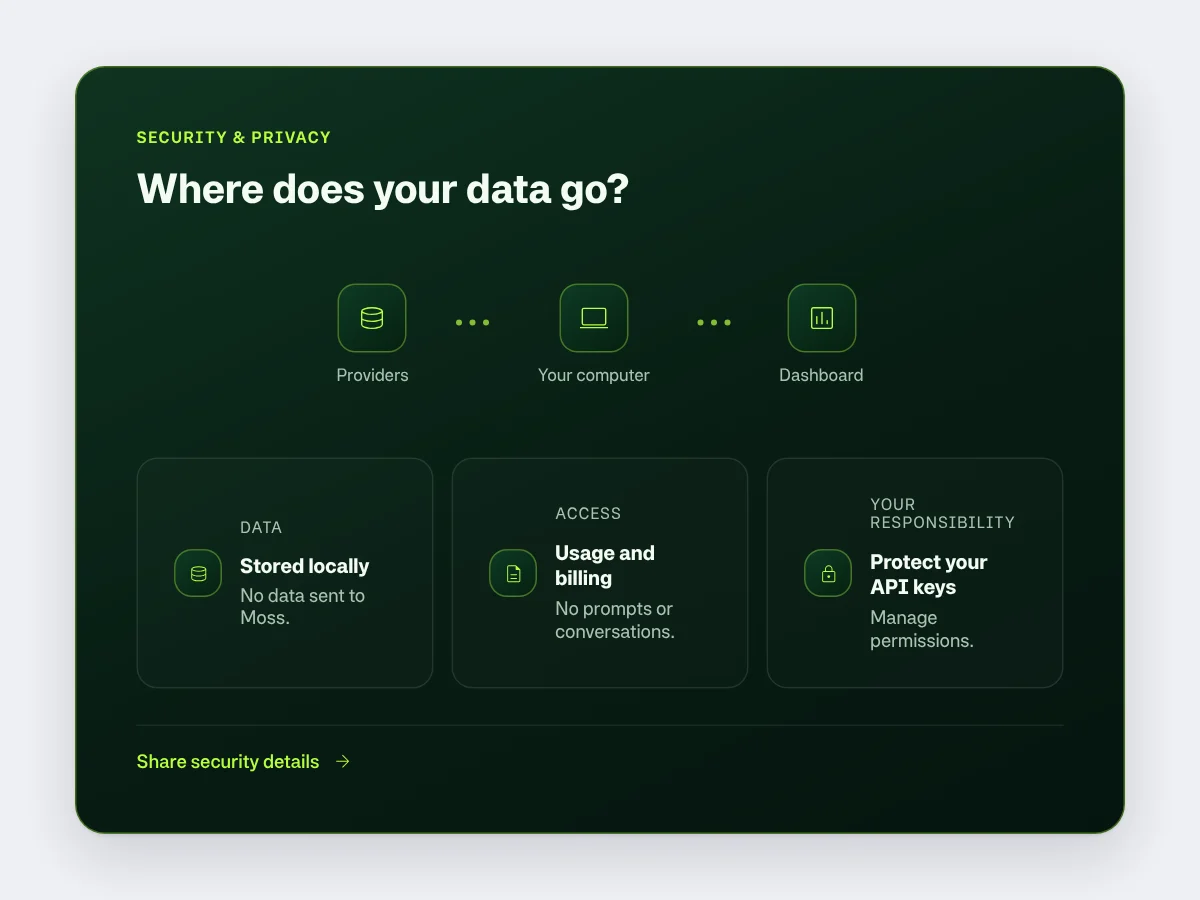
The trust blockBefore the downloadSolves readers and engineering
A design system called 'Blocks' that is additive to an article, while the existing prose and H1 stay the same, since the articles rank well already.
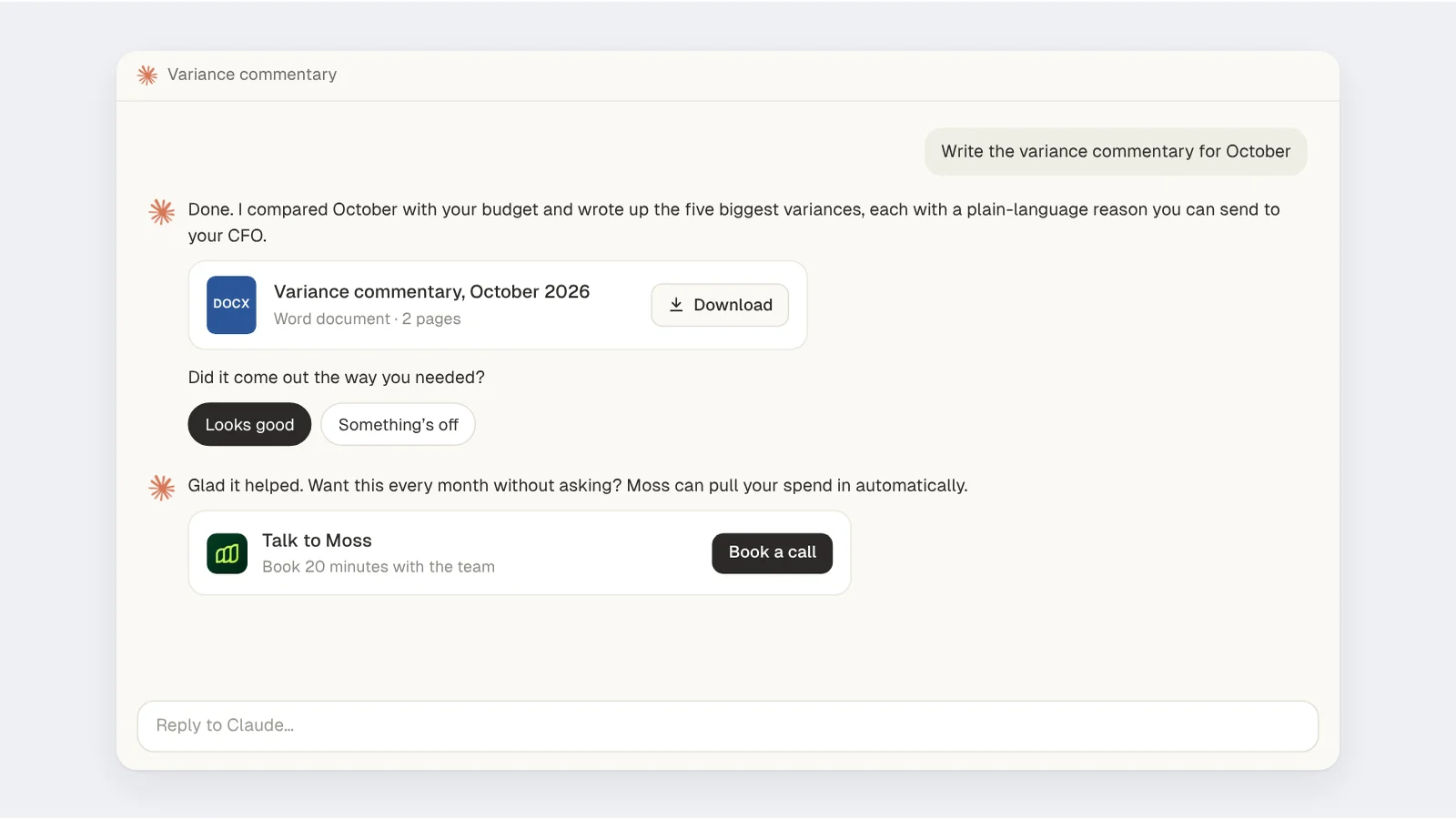
A skill’s outputAfter the outputSolves knowing it worked
Output that finance professionals can put their name on in a shareable format. Collecting feedback at the end, which turned out more challenging than anticipated.
Outcome
A research-backed playbook, including the UX check for skills and tools which the team finds useful and uses regularly. Teammates now build articles on their own that follow the guidelines. The problem we ran into once again: the articles had no real distribution, so few people found them. That’s where the AI Hub comes in as a new distribution channel for Moss.
 Moss · 2026
 Claude Code and
 Prismic.